
How to Know If Your Sales Pipeline Is Real or Just Wishful Thinking
Most founders I’ve asked this question to have answered something like: “Probably around RM490,000 this month.” Then a pause. Then: “Give or take.”
The qualifier is doing most of the work.
A pipeline number with a qualifier attached isn’t a forecast. It’s a guess with paperwork behind it. And building a team, hiring capacity, and planning spend on the basis of a guess is how good months become bad months without anyone knowing why.
The Difference Between Pipeline and Possibility
A CRM full of open deals looks like a pipeline. Often it isn’t.
Pipeline means deals that have demonstrated buying intent — where the prospect has taken a specific action, responded to a proposal, confirmed a timeline, or cleared a decision-making step. Possibility means someone once showed interest and was logged before the conversation went quiet.
Both look identical in a CRM. Both count toward the total on the board. Only one of them should inform your revenue plan for the month.
The clearest sign of a possibility pipeline disguised as a real one: when you ask “when is this closing?” and the answer is “I’m not sure, I should probably follow up.” If you don’t know, it hasn’t moved.
Four Signs Your Pipeline Isn’t Real
Deals that haven’t moved in 30 days. A deal sitting in “Proposal Sent” for a month without a response isn’t in your pipeline. It’s in a holding pattern waiting for someone to either close it or acknowledge it’s gone cold. Clean these out. A smaller, accurate pipeline is more useful than a padded one.
No next action logged. Every live deal should have a specific next action with a date attached. Not “follow up soon” — a specific task: “Send revised quote by Thursday,” “Call to confirm timeline on 23 April.” If the next action is vague or missing, the deal isn’t being managed.
Proposals sent without qualifying. Sending a quote to someone who hasn’t confirmed budget, decision authority, or timeline creates the illusion of movement. The quote went out — the deal didn’t move. Proposals to unqualified leads inflate the pipeline number without adding value.
The founder is the only one who knows where each deal stands. If you’re the only person who can tell me the status of every open deal, the pipeline isn’t a system — it’s a memory. When the founder is away or focused on delivery, deals stop moving.
The Pipeline Audit
Run this on your current open deals. Takes about 20 minutes.
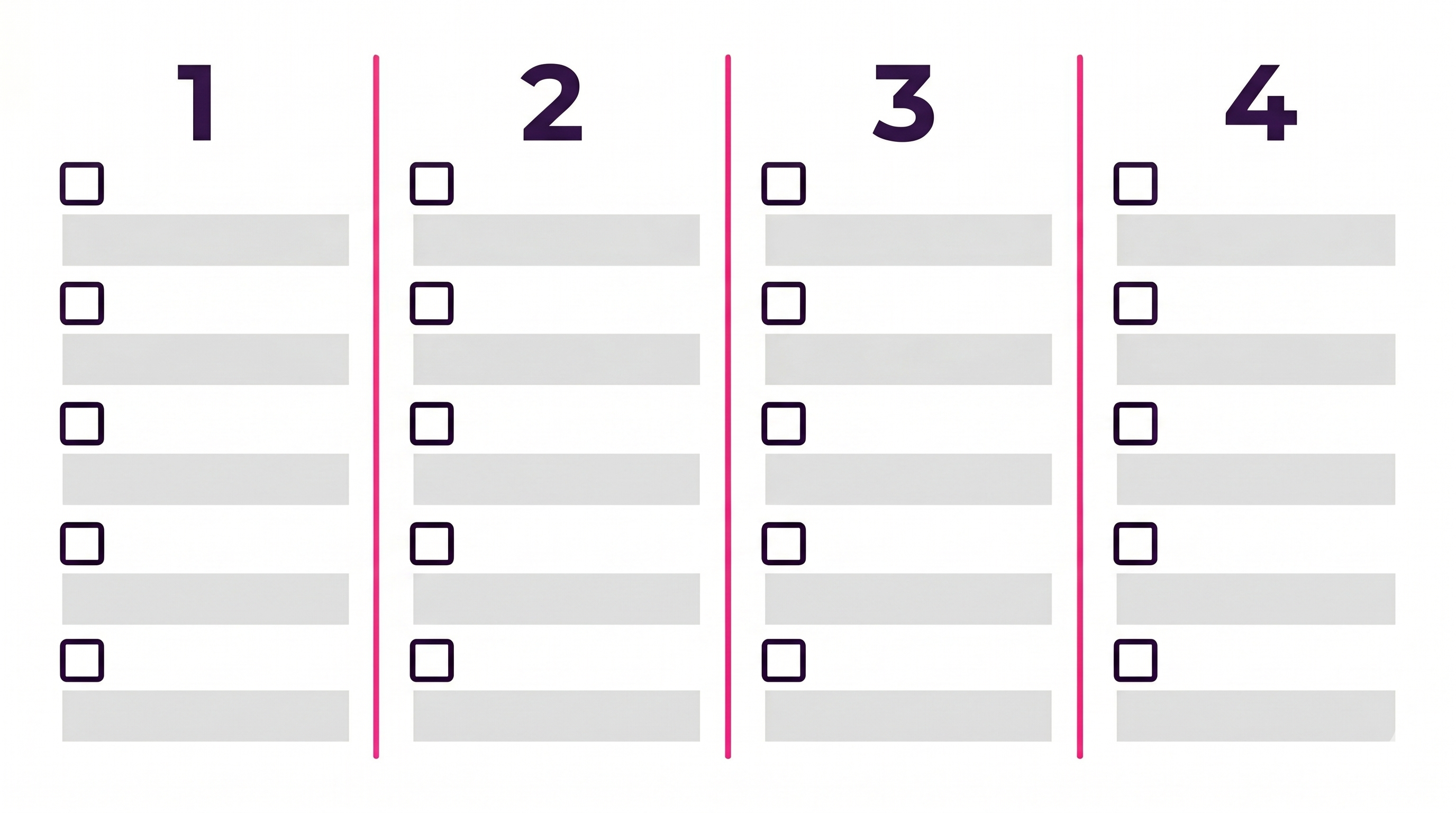
For each open deal, answer:
When was the last meaningful interaction? (A “just checking in” message doesn’t count.)
Has the prospect taken any action — replied, forwarded to a colleague, requested changes, confirmed availability?
Is there a specific next step with a date attached?
Do you know the decision timeline from the prospect’s side?
Deals that score zero or one on these four questions should be moved to a “cold” stage immediately. Don’t delete them — get them out of the active pipeline.
What remains is closer to your real number. For most founders who run this audit, the number drops. That’s not bad news — it’s accurate information. The answer to a smaller-than-expected pipeline is to build better volume from the top of funnel, not to keep inflating the count at the bottom.
What a Real Pipeline Process Looks Like
Two things need to be true.
First, there’s a shared definition of what “active” means — what actions a lead must have taken to count as a live deal. This gets built into CRM stages: a deal doesn’t sit in “Proposal Sent” indefinitely, it either advances within a set period or drops automatically to “Stalled.”
Second, the pipeline gets reviewed weekly by whoever is responsible for closing — not to count the number, but to confirm the next action for each deal is logged, dated, and owned.
Ten minutes a week. For most SMEs in Malaysia and Singapore, this process doesn’t exist. The pipeline gets looked at when revenue is already low — at which point it’s too late to recover deals that went cold three weeks ago.
The Next Step
The SME Funnel Fixer includes a Convert stage diagnostic that maps whether your current pipeline is actively managed or passively logged — and surfaces the two or three deals most likely to close if followed up this week.
[Get the SME Funnel Fixer (For Free) →]
Or if you'd rather work through it with someone, Whatsapp us here to book a strategy call.
[WhatsApp Us]
-Brian Wong